
Lighting on Location: What to Do When Your Client’s House Is Dark (and You Can’t Reschedule)
If you photograph families or newborns in their homes, you’ve had this moment.
You walk in.

The nursery is tiny.
The walls are green.
There’s one small window — maybe.
It’s raining.
The ceiling is low.
And your brain immediately starts calculating:
Can I move the crib?
Can I rotate the bed?
Can I crank my ISO without destroying skin tones?
Can I make this work?
For a long time, I believed in “finding the light.”
Now I believe in creating it.
And I’ve seen photographer after photographer share what happened when they stopped chasing windows and started controlling light instead.
“Tiny Room With NO Windows”
One photographer wrote:
“Tiny room with green accent wall and NO WINDOWS. I was able to capture images I'm proud of.”
No windows.
Not “bad windows.”
None.
Another said:
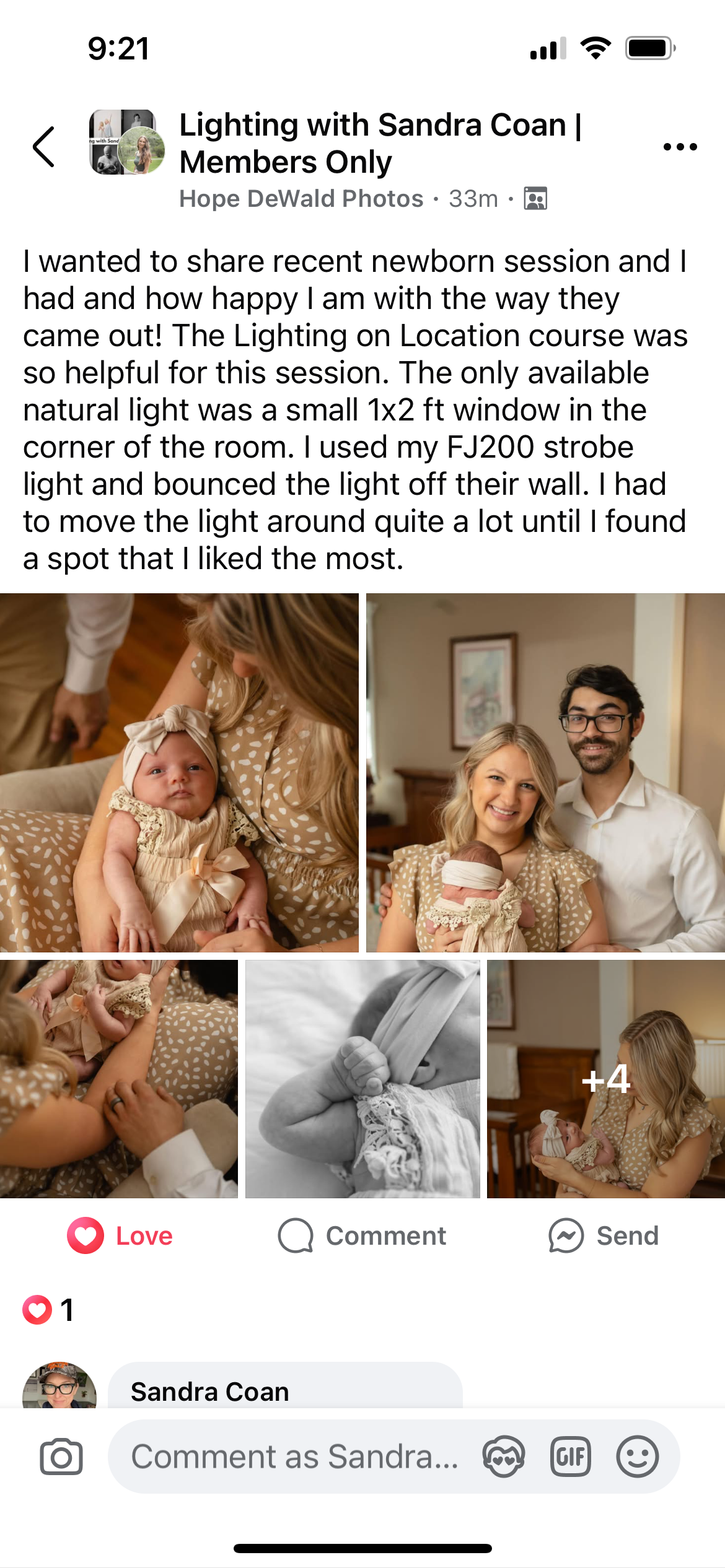
“The only available natural light was a small 1x2 ft window in the corner.”
Another:
“It was DARK. Lots of natural light in the room, but it was rainy/cloudy day.”
Dark. Small. Green walls. Cloudy.
These aren’t ideal Pinterest homes.
These are real client homes.
The Before: What Most of Us Used to Do
Before learning how to use artificial light confidently, most photographers:
Push ISO higher than they’re comfortable with
Shoot wider than they’d like (hello f/1.2 stress)
Underexpose and “fix it later”
Avoid certain angles
Avoid certain rooms
Avoid in-home sessions entirely
Or worse:
They leave feeling like they “survived.”
That’s not the same as thriving.
The Shift: Control
Here’s what I love most about these testimonials.
They don’t say:
“This gave me better images.”
They say:
“I felt in control.”
“It saved me.”
“My life is easier with artificial light.”
“I would have been super nervous before.”
“Now I can take things like this on.”
Control is everything on location.
Because when you control light, you control:
Exposure
Direction
Shadow depth
Skin tone
Consistency
Mood
And you stop being at the mercy of architecture and weather.
Artificial Light Is Kinder
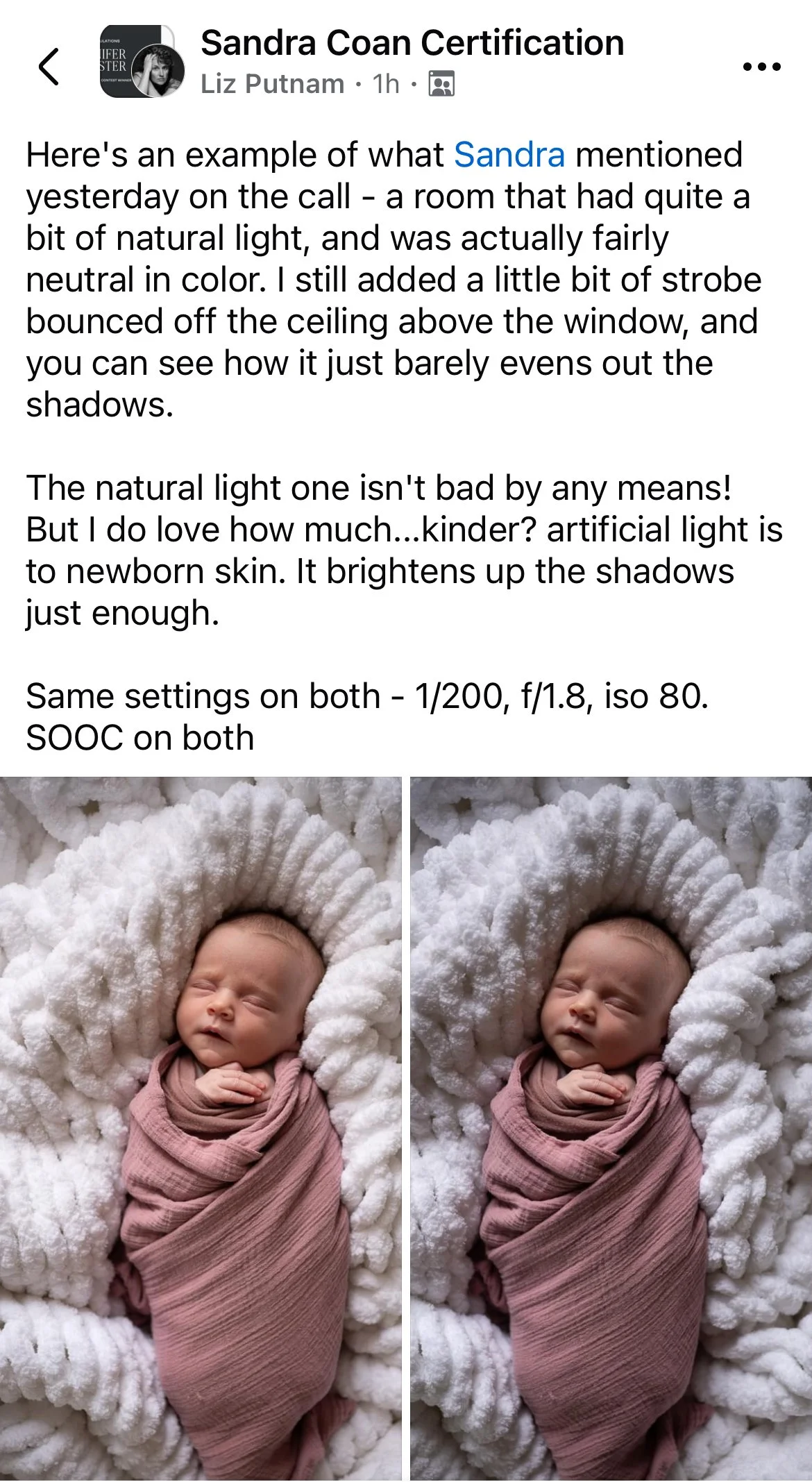
One certification student shared a side-by-side:
Same settings.
Same room.
Natural light vs. bounced strobe.
She wrote:
“The natural light one isn't bad by any means. But I do love how much… kinder? artificial light is to newborn skin. It brightens up the shadows just enough.”
This is something photographers don’t realize until they see it.
Natural light can be contrasty, directional, uneven — especially in homes.
A softly bounced strobe:
Evens out shadows
Reduces color cast
Softens transitions
Creates consistent skin tone
Keeps ISO low
Keeps detail clean
And when done correctly?
It still looks natural.
“Family of 10. Small Room.”
One photographer used what she learned during a lifestyle newborn session with a family of 10.
Small space. Big group.
She said:
“I felt in control of the lighting.”
That sentence matters.
When you’re photographing:
Toddlers
Siblings
Newborns
Parents who are exhausted
A house that isn’t styled for Instagram
You don’t need lighting to be another stressor.
You need it to be predictable.
Lighting on Location Is Not About Fancy Setups
It’s not about five lights.
It’s not about overpowering the sun.
It’s not about turning a home into a studio.
It’s about:
One light
One modifier
One predictable placement
One repeatable method
And understanding how to shape it in small rooms.
Low ceilings? Bounce it.
Green walls? Control your spill.
Tiny window? Supplement and even it out.
Rainy day? No problem.
“This Saved Me Today.”
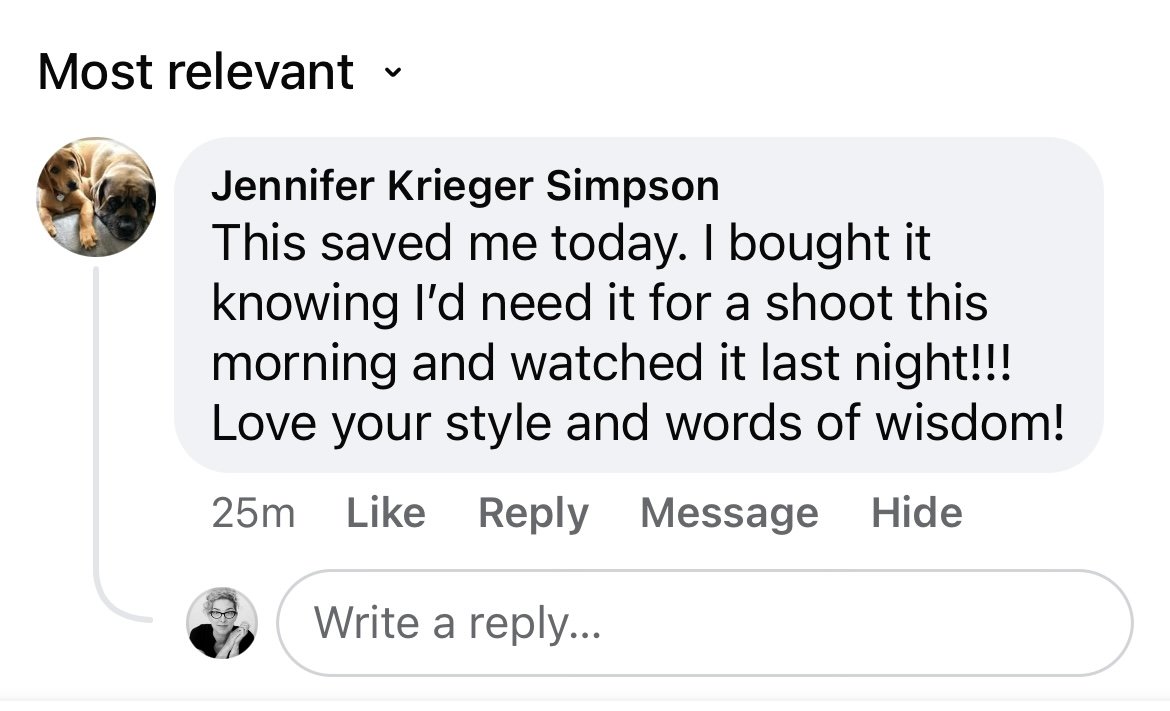
One photographer bought the course knowing she had a shoot the next morning.
She watched it the night before.
And wrote:
“This saved me today.”
That’s what Lighting on Location is designed for.
Not abstract lighting theory.
Real-world:
Small nurseries
Dark master bedrooms
Wood-paneled basements
Green accent walls
Cloudy Pacific Northwest days
No-window hospital rooms
Real rooms.
Real families.
Real stress.
Solved.
If You’re Still Avoiding In-Home Sessions
If you:
Feel relief when a client wants studio
Panic when you see dark paint
Avoid photographing in the afternoon
Reschedule for weather
Feel nervous before walking into a new home
It’s not because you’re not talented.
It’s because you haven’t been given a simple, repeatable lighting system that works in unpredictable spaces.
Lighting on Location was built specifically for this.
Not perfect homes.
Not styled sets.
Real homes.
Because your clients don’t live in Pinterest boards.
They live in houses with green walls and tiny windows.
And you deserve to feel confident walking into any of them.